Best Sweet Rubs for Pork and Chicken on the Pellet Grill
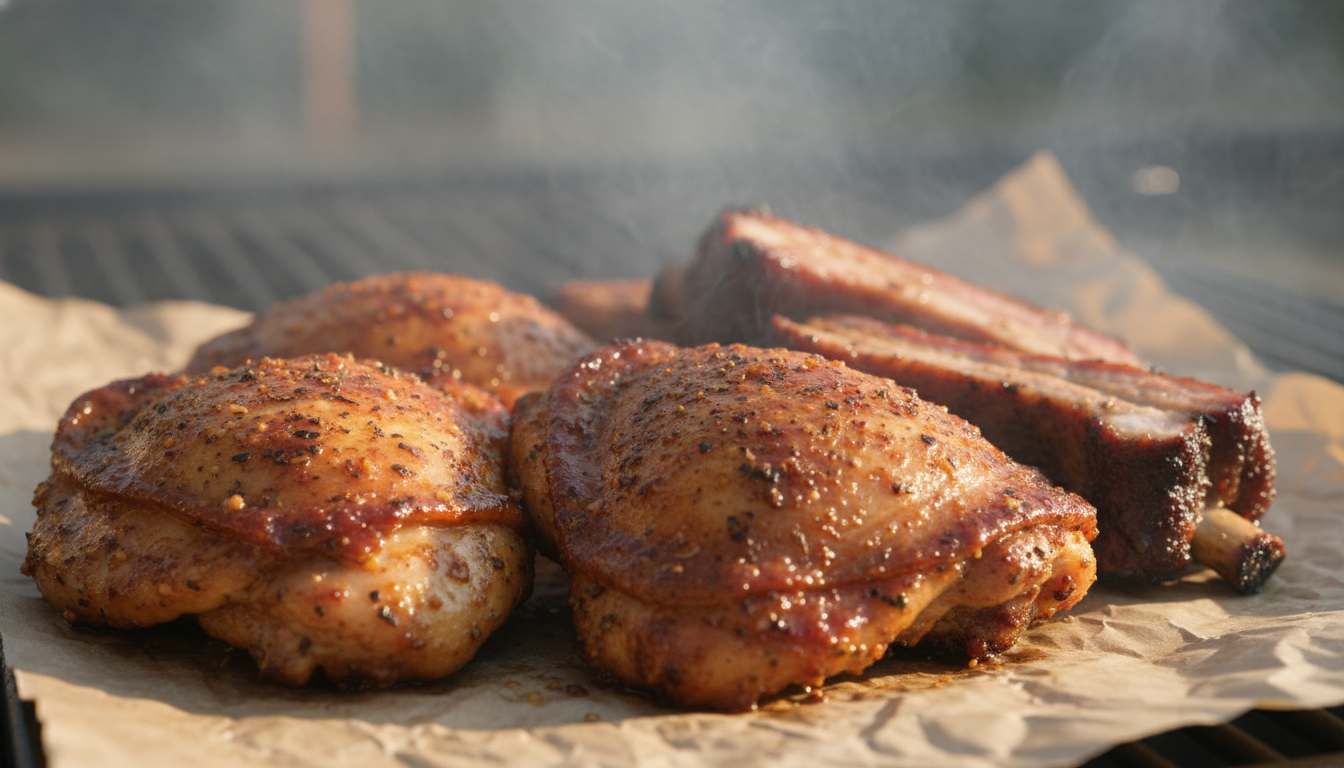
A sweet rub on pork or chicken isn’t just about sugar—it’s about balance. The best ones layer brown sugar heat with savory depth so the crust caramelizes without burning, especially on a pellet grill where you’re often running 275°F–325°F for extended cooks. Here are the standout options worth keeping in your pantry.
What Makes a Sweet Rub Work on Pellet-Grilled Meat
Sugar is both the draw and the risk. Fine granulated sugar scorches fast. Brown sugar, turbinado, and coconut sugar all melt more gradually and hold up better at the temps a pellet grill typically runs. The best sweet rubs cut that sugar with salt, smoked paprika, garlic, and some form of heat—black pepper, cayenne, or white pepper—so the sweetness supports the bark instead of dominating it.
Fat content matters too. Chicken thighs and pork shoulders have enough intramuscular fat to survive a richer coating. Chicken breasts and pork tenderloins are leaner, so you want a rub with a higher salt-to-sugar ratio to pull moisture to the surface and hold it there.
Top Picks
Meat Church Honey Hog is the easiest recommendation for most cooks. It’s built around honey granules and brown sugar, but the garlic and onion powder keep it from tasting like candy. On a pork butt at 250°F, it forms a dark, crackly bark. On spatchcocked chicken at 325°F, the skin comes out lacquered. Widely available at Walmart and Academy Sports, and typically runs around $10–$12 for a 14 oz bottle.
Killer Hogs The BBQ Rub leans sweet but skews more toward the competition circuit style—heavy brown sugar, fine grind, and a back-end heat from cayenne that sneaks in after the sweetness. It’s particularly strong on pork ribs and chicken wings. The fine grind means it sticks without binders on dry meat. A 16 oz bottle usually runs $12–$14.
Sweetwater Spice Tres Chiles Brown Sugar Brine isn’t a rub—it’s a brine concentrate—but it deserves a mention because combining a sweet brine with a simple homemade rub is often better than any commercial rub alone, especially for chicken. Brine for two hours, pat dry, apply a basic sweet paprika-and-brown-sugar rub, and the results consistently beat a dry-rub-only approach.
Lanes BBQ Signature Sweet Heat does what the name says. It’s noticeably hotter than Honey Hog, with a sharper cayenne presence, but the sugar content is still high enough to produce good caramelization. If you’re cooking for people who want some kick with their sweet crust, this is the move. Around $11–$13 for 12.8 oz.
Homemade all-purpose sweet rub is worth knowing how to build:
- 3 tbsp brown sugar (packed)
- 1 tbsp smoked paprika
- 1 tbsp kosher salt
- 1 tsp garlic powder
- 1 tsp onion powder
- ½ tsp black pepper
- ¼ tsp cayenne
That ratio works on both pork and chicken. Scale the cayenne up or down. If you’re cooking lean cuts, bump the salt by half a teaspoon.
How to Apply It for Maximum Bark
Dry the surface first. Pat chicken and pork dry with paper towels before applying any rub. Moisture is the enemy of bark formation—the rub needs to adhere to the meat surface, not dissolve into pooled liquid.
Apply a thin binder if you’re using a commercial rub on chicken. Yellow mustard, hot sauce, or even a light brush of avocado oil helps the rub stick and adds zero detectable flavor by the time the cook is done. On pork shoulder and ribs, the exterior fat handles adhesion on its own.
For pellet grills specifically, apply the rub at least 30 minutes before the cook, ideally longer. The salt pulls moisture to the surface, which then reabsorbs with the rub dissolved in it—that’s what builds the foundation for a real bark. Apply it the night before and refrigerate uncovered for even better results.
Temperature and Timing Considerations
Sweet rubs are more forgiving on a pellet grill than over direct charcoal heat because you have consistent indirect convection. Still, keep a few things in mind:
- Pork shoulder/butt: 250°F–275°F works well. The long cook (8–12 hours for a full butt) gives the sugar time to develop without burning.
- Pork ribs: 250°F–275°F, 3–2–1 method or unwrapped if you want more bark. The wrap stage (in foil or butcher paper) softens the sweet crust slightly—if you want a harder bark, skip the wrap or cut the wrap time short.
- Chicken thighs and drumsticks: 325°F–350°F. Higher temp means faster fat render and crisper skin. Watch the sugar at 375°F+; it can go from caramelized to charred quickly.
- Chicken breasts: 300°F–325°F, pull at 160°F internal. Lean meat with sweet rub needs a shorter window to avoid a bitter exterior.
Which One Should You Buy
If you want one bottle that covers both pork and chicken without overthinking it, Meat Church Honey Hog is the answer. If you cook competition-style or want more heat, go with Killer Hogs or Lanes Sweet Heat. If budget matters, the homemade version above costs pennies per batch and lets you tune the heat and salt levels to your specific cook.
Bottom line: The rub matters less than application and temperature management. A good sweet rub, applied dry to dry meat at the right grill temp, will outperform an expensive rub slapped on wet meat at the wrong heat every time.