Camp Chef Woodwind Review: Is It Still Worth It?
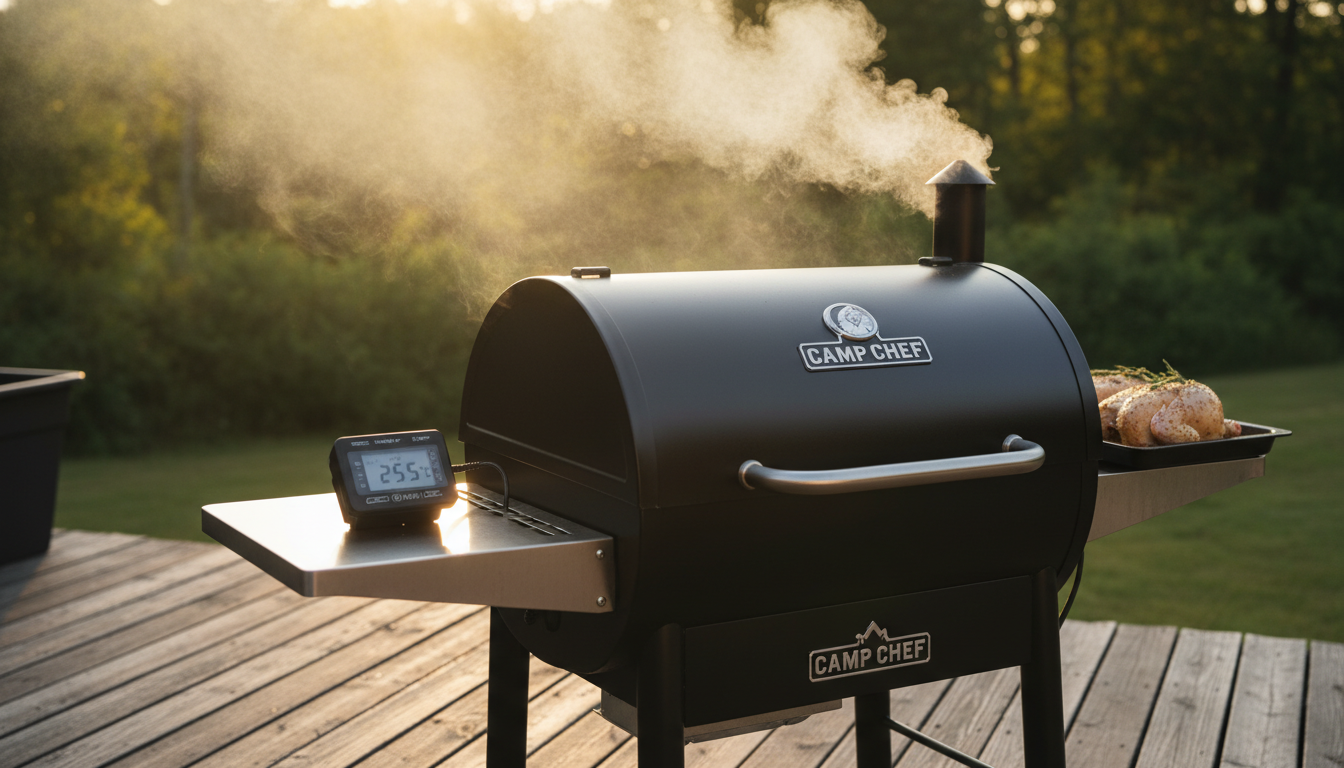
The Woodwind is Camp Chef’s most recognized pellet grill line, and it keeps coming up in buying conversations for a reason. Short answer: it earns the attention, with a few caveats worth knowing before you spend the money.
Which Woodwind Model Are We Talking About?
Camp Chef sells several Woodwind variants — the Woodwind Pro 24, Woodwind Pro 36, and the older Woodwind Wi-Fi models still floating around retail. The Pro series is the current lineup and the one worth evaluating. The 24 gives you 811 sq in of cooking space; the 36 bumps that to 1236 sq in with a second rack.
If you’re feeding a family of four or doing occasional larger cooks, the Pro 24 handles it. Weekend competition cooks or anyone regularly doing full briskets alongside ribs should step up to the 36.
Build Quality and First Impressions
The Woodwind Pro is built noticeably better than budget pellet grills in the $400–$500 range. The lid is thick-gauge steel with a solid hinge, the grease management channel is thoughtfully routed, and the legs are stable without any flex once assembled.
The standout hardware feature is the Ash Kickin’ Cleanout system — a lever at the bottom of the fire pot that drops ash into a cup instead of requiring you to vacuum it out after every cook. It’s a genuine quality-of-life upgrade, not a gimmick. If you cook frequently, you’ll appreciate it within the first week.
The sidekick burner attachment is a separate add-on that mounts to the left side and gives you a propane-powered sear station or flat top. Not included by default, but worth budgeting for if you want an all-in-one outdoor cooking setup.
Temperature Control and Cooking Performance
The PID controller on the Woodwind Pro holds temperature accurately — typically within ±5°F of your set point during stable ambient conditions. That matters for low-and-slow cooks where consistency over eight or ten hours defines the outcome.
Startup takes around 10–12 minutes to reach 225°F. Max temp is 500°F, which is enough for roasting and chicken but not enough for a proper sear on a steak without the Sidekick. That’s a known limitation of the platform, and it’s why Camp Chef sells the add-on.
The smoke output is where the Woodwind Pro earns its reputation. The Smoke Control dial lets you set smoke levels from 1 to 10 independently of temperature. Level 10 runs the auger intermittently to generate more smoke without spiking heat — useful when you want heavy smoke flavor at 225°F without babysitting the cook.
App and Connectivity
The Woodwind Pro connects via Wi-Fi to the Camp Chef app. The app is functional — you can monitor temp, adjust settings, and get alerts when your meat probes hit target. It’s not the most polished interface, but it works reliably, which matters more than design.
Two meat probes are included. They read accurately and plug directly into the controller. You can name them in the app, set alerts per probe, and watch the graph over a long cook. Nothing groundbreaking, but the execution is solid.
How It Compares to the Competition
The Woodwind Pro 24 sits in the same price range as the Traeger Pro 575 and the Weber Smokefire EX4. Here’s where it stands:
- vs. Traeger Pro 575: The Woodwind wins on smoke output and ash management. The Traeger has a wider dealer network and slightly better app polish. Both grill reliably, but Camp Chef gives you more smoke flavor control.
- vs. Weber Smokefire EX4: The Smokefire gets hotter (600°F+) and has better direct-flame searing. The Woodwind is easier to maintain and has fewer reported auger issues. Weber’s app connectivity has also improved significantly in recent generations.
- vs. Pit Boss Pro Series 1150: The Pit Boss is cheaper and has more cooking space. The Woodwind has a better controller, better build consistency, and the ash cleanout system. You pay for that.
If maximum smoke flavor at a controllable level is your priority, the Woodwind Pro beats the Traeger at the same price. If searing matters as much as smoking, the Smokefire is harder to ignore.
What Owners Get Right and Wrong About It
The most common complaint is pellet consumption — the Woodwind runs through pellets faster at high smoke settings, which tracks given how the auger cycling works. Budget for it.
Some owners also report that the grease channel can overflow during very fatty cooks (like a full packer brisket with a heavy fat cap down) if you’re not keeping the channel clean. That’s user maintenance more than a design flaw, but worth knowing.
On the positive side, the sear grates included with the Pro series leave better grill marks than the standard rod grates on most competitors, and heat distribution across the full cooking surface is even — no cold corners.
Bottom line: The Camp Chef Woodwind Pro is one of the better-built pellet grills under $1,000. The smoke control system is genuinely useful, the ash cleanout saves real time, and the PID controller is accurate. Buy the 24 if space or budget is a constraint; buy the 36 if you cook for crowds. Add the Sidekick if you want searing capability without buying a second grill.